
Biocomposites
(from processed natural fibers)
- Lightweight: density as low as 1.16 g/cm³, ~42% lower than glass-fiber composites.
- Mechanical performance: strength-to-weight ratio of 140 kj/kg (glass fiber composite ~313 kj/kg).
- Environmental resistance: the same durability of epoxy systems (water, corrosion and thermal resistance).
- High renewable content: ~70% natural/bio-based content.
- Aesthetics: natural textile appearance available in different colors.
- Lower impact: natural raw-materials, lower CO2 footprint and biodegradability in less than a year in soil conditions.

Biocomposite in five natural colors.
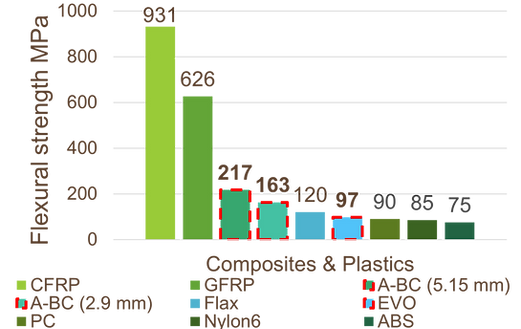
Superior resistance for semi-structural applications.

Exceptional strength-to-weight ratios, while optimizing cost per area/mass.

Bio-based polymer matrix solutions, thermoplastics or thermoset.


Electromagnetic transparency for Radome enclosures (antenna, radar, and electronic systems).
Get in touch

Hand Lay-up

Bending test ASTM D7264

Compatible with conventional composite manufacturing processes

End-of-life solutions
Biodegradability or Recyclability

Tailored for environmental resistance under harsh effects